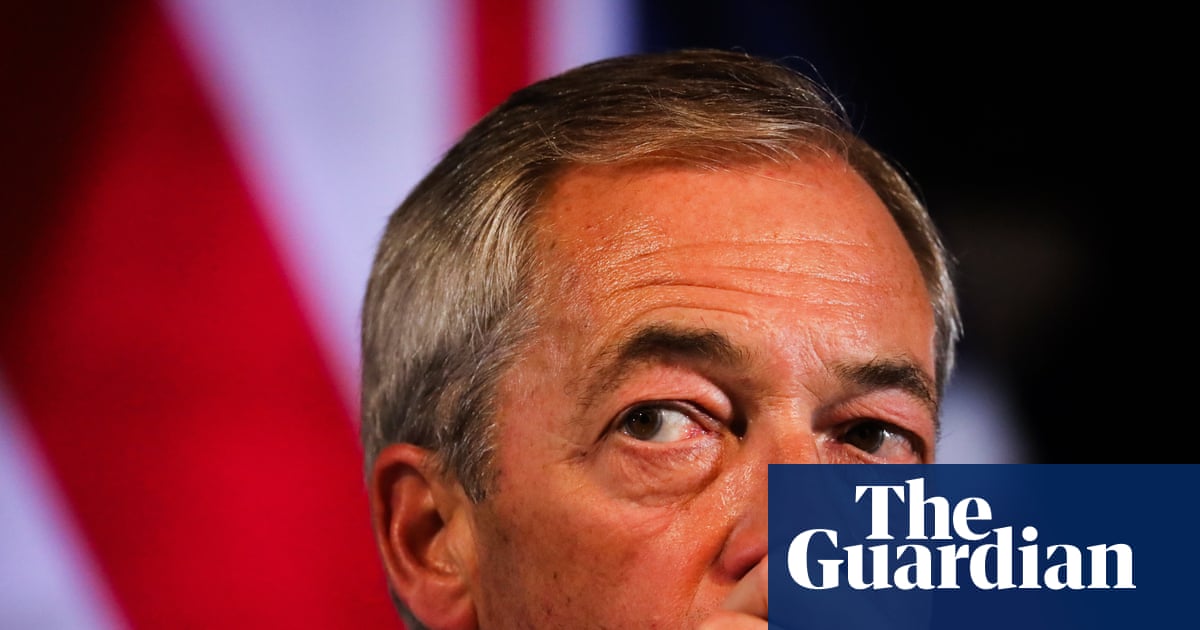
Nigel Farage has been accused of pushing a female Liberal Democrat MP during an incident in the House of Commons earlier this year, according to The Guardian. The allegation came from the Lib Dems' deputy leader, Daisy Cooper, after the Reform UK leader said he had stayed away from this week's Budget statement because of an earlier confrontation over seating.
Farage said on Wednesday that he did not attend John Healey's first Budget speech as chancellor because his usual place in the chamber had been moved. He described a "physical altercation" with another MP on the day of the state opening of parliament in May, and said he chose to keep his distance from the Budget to steer clear of further conflict. It later emerged that Commons staff had removed his seat reservation because it lacked the correct date stamp.
Why it matters
The exchange turns a procedural spat about who sits where into a direct allegation of physical conduct between two party leaders' teams, made in public and on the record. It also pulls Reform UK's internal culture into the argument: Cooper linked the claim to a separate row at Reform's conference, where she said female journalists and members were bundled out of a hall. With Farage's party positioning itself as an outsider force in Westminster, questions about how its politicians behave in the chamber carry weight beyond the usual point-scoring.
What Cooper said
Speaking to Sky News, Cooper said her information was second-hand. She told the broadcaster she did not see the incident and was not present, but that her understanding was that Farage pushed one of her party's female MPs out of his way, and that a male Lib Dem MP then took him to task over it. She stressed that the episode happened several months ago.
Cooper also used the interview to go on the offensive against Reform, saying her party would not accept lectures on conduct from a movement that had, in her words, a problem at its own conference with the removal of female journalists and members from a hall.
The MP involved is understood to be Caroline Voaden. In a social media post, she disputed Farage's account directly, writing that they both knew it was not true. She added that she was still waiting for an apology he had been required to send her, and said she did not expect it to arrive.
Reform's response
Robert Jenrick, Reform's shadow chancellor, declined to engage with the allegation when asked about it. He said he was tired of what he called pathetic debates within Westminster, and argued that Reform politicians value parliament and its institutions while being more focused on the country's problems and on work outside the London bubble. He said he would not respond to or dignify Cooper's remarks.
Farage's own explanation for his absence centred on the seating mix-up rather than on the Lib Dems. According to his account, the loss of his reserved place left him unwilling to enter the chamber on Budget day, given what had happened at the state opening. The Commons authorities' removal of the reservation, because of the missing date stamp, sits alongside that explanation without resolving the dispute over what took place in May.
Neither the article's sources nor the statements made so far settle the factual question of what happened between Farage and Voaden. Cooper has been explicit that her account is not first-hand, Voaden has publicly contradicted Farage without describing the incident in detail, and Reform has not offered its own version beyond Jenrick's refusal to discuss it. The Guardian's reporting sets out the competing claims as they stand.
Watch for whether Commons authorities or the Speaker's office comment on the May incident, and whether Voaden's requested apology materialises.